Latest News and Events

Quiet Strength: Dr. Bobbi Stanley on Protecting Dentists and Advancing Dentistry
We’re honored to share that Dr. Bobbi Stanley, DDS, co-founder of Stanley Institute, was recently featured in Influential Dentists Magazine in an article titled:
“Quiet Strength: How W&H’s Power Edition Handpiece Helps Dentists Protect Their Hands, Elevate Patient Comfort, and Prioritize What Really Matters.”
While the article highlights a specific piece of technology, the deeper message is much bigger than a handpiece.
It’s about the future of dentistry — and the sustainability of the clinicians behind it.
A Shift Our Profession Can’t Ignore
Dentistry continues to advance at a rapid pace. Digital workflows, guided surgery, zirconia, full-arch solutions — innovation is everywhere.
But there’s one area the profession hasn’t historically prioritized enough:
The physical wellbeing of the dentist.
After thousands of procedures, the cumulative effects of vibration, grip force, pressure, and posture become undeniable. Hand fatigue. Wrist strain. Joint stiffness. Early arthritis. These aren’t rare occurrences — they’re common career realities.
Dr. Stanley’s feature in Influential Dentists brings this issue to the forefront:
If we want longer, healthier, high-performing careers, ergonomics must become part of the clinical conversation.
Why This Conversation Matters Now
In the article, Dr. Stanley discusses how the W&H Power Edition handpiece supports:
- Reduced vibration and microstrain
- Minimal pressure requirements during cutting
- A noticeably quieter operatory environment
- Improved comfort during long restorative and implant procedures
But the true takeaway isn’t simply efficiency.
It’s sustainability.
When tools reduce physical strain:
- Dentists maintain precision longer
- Energy levels remain higher throughout the day
- Career longevity increases
- Patient experience improves
A calmer operatory leads to calmer patients.
A protected clinician leads to better dentistry.
This is the kind of systems thinking we emphasize at Stanley Institute — where clinical excellence and clinician wellbeing are not separate goals, but aligned priorities.
From Feature Article to Industry Movement
Being featured in Influential Dentists Magazine is an honor. But more importantly, it reflects something larger:
The profession is beginning to recognize that protecting the dentist is just as critical as advancing dentistry.
Technology should not only perform on the tooth.
It should protect the hands that perform the dentistry.
At Stanley Institute, we teach that smarter systems, better ergonomics, and intentional equipment choices are foundational to predictable outcomes, profitability, and personal longevity.
This article contributes to that broader shift.
Read the Full Feature
To explore Dr. Stanley’s full insights and the deeper discussion around ergonomics, patient comfort, and sustainable clinical performance, we invite you to read the complete article in Influential Dentists Magazine.
All blogs
Quiet Strength: Dr. Bobbi Stanley on Protecting Dentists and Advancing Dentistry
We’re honored to share that Dr. Bobbi Stanley, DDS, co-founder of Stanley Institute, was recently featured in Influential Dentists Magazine in an article titled:
“Quiet Strength: How W&H’s Power Edition Handpiece Helps Dentists Protect Their Hands, Elevate Patient Comfort, and Prioritize What Really Matters.”
While the article highlights a specific piece of technology, the deeper message is much bigger than a handpiece.
It’s about the future of dentistry — and the sustainability of the clinicians behind it.
A Shift Our Profession Can’t Ignore
Dentistry continues to advance at a rapid pace. Digital workflows, guided surgery, zirconia, full-arch solutions — innovation is everywhere.
But there’s one area the profession hasn’t historically prioritized enough:
The physical wellbeing of the dentist.
After thousands of procedures, the cumulative effects of vibration, grip force, pressure, and posture become undeniable. Hand fatigue. Wrist strain. Joint stiffness. Early arthritis. These aren’t rare occurrences — they’re common career realities.
Dr. Stanley’s feature in Influential Dentists brings this issue to the forefront:
If we want longer, healthier, high-performing careers, ergonomics must become part of the clinical conversation.
Why This Conversation Matters Now
In the article, Dr. Stanley discusses how the W&H Power Edition handpiece supports:
- Reduced vibration and microstrain
- Minimal pressure requirements during cutting
- A noticeably quieter operatory environment
- Improved comfort during long restorative and implant procedures
But the true takeaway isn’t simply efficiency.
It’s sustainability.
When tools reduce physical strain:
- Dentists maintain precision longer
- Energy levels remain higher throughout the day
- Career longevity increases
- Patient experience improves
A calmer operatory leads to calmer patients.
A protected clinician leads to better dentistry.
This is the kind of systems thinking we emphasize at Stanley Institute — where clinical excellence and clinician wellbeing are not separate goals, but aligned priorities.
From Feature Article to Industry Movement
Being featured in Influential Dentists Magazine is an honor. But more importantly, it reflects something larger:
The profession is beginning to recognize that protecting the dentist is just as critical as advancing dentistry.
Technology should not only perform on the tooth.
It should protect the hands that perform the dentistry.
At Stanley Institute, we teach that smarter systems, better ergonomics, and intentional equipment choices are foundational to predictable outcomes, profitability, and personal longevity.
This article contributes to that broader shift.
Read the Full Feature
To explore Dr. Stanley’s full insights and the deeper discussion around ergonomics, patient comfort, and sustainable clinical performance, we invite you to read the complete article in Influential Dentists Magazine.
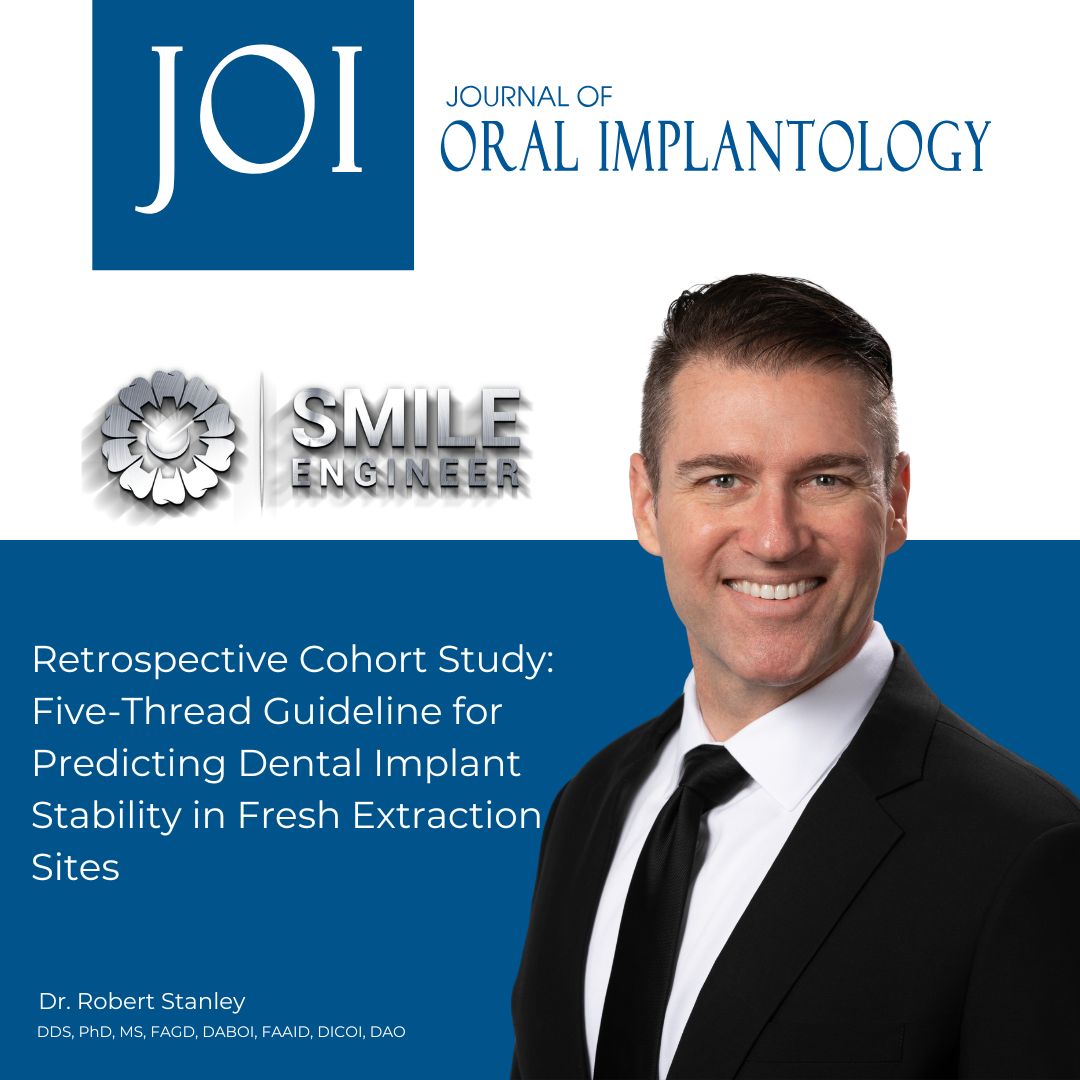
Introducing Stanley’s Five-Thread Guideline: A Predictive Model for Primary Stability
A Predictive Model for Primary Stability in Immediate Implants
We are proud to share that Dr. Robert Stanley has been published in the Journal of Oral Implantology with a study evaluating a simple but powerful predictive model for primary implant stability in fresh extraction sites: Stanley's 5-Thread Guideline (5-TG).
For decades, clinicians have relied heavily on insertion torque as a proxy for implant stability. Yet anyone who has placed immediate implants knows:
Torque alone does not tell the full story.
This new retrospective cohort study introduces and evaluates a different approach — one grounded in digital planning, visualization, and thread engagement within native bone.
The Clinical Problem
When placing implants into fresh extraction sites, one of the most difficult questions is:
Will this implant achieve primary stability?
This question matters for two reasons:
- It determines whether immediate placement is appropriate.
- It directly impacts patient communication and expectation management.
Without a reliable predictive model, clinicians are often forced to make intraoperative decisions under pressure — sometimes pivoting to site development or delayed placement mid-surgery.
The profession has lacked clear guidelines to forecast stability before the surgical appointment.
Stanley's 5-Thread Guideline (5-TG)
The 5-TG proposes that engaging at least five implant threads in native bone correlates strongly with high primary stability.
In this study:
- 150 immediate implant cases were evaluated
- Stability was categorized as high, moderate, low, or none
- Statistical analysis showed a highly significant association between thread engagement and stability
(Fisher exact test p = 0.0000207)
Among implants that were stable at placement:
- 95.1% successfully integrated
- Average ISQ values were strong (mean ≈ 71)
- Stability was predictable across anterior and posterior regions
Perhaps most importantly, many successful cases demonstrated wide variability in insertion torque — challenging the long-held belief that torque is the primary predictor of stability.
Why This Matters
This publication reinforces a larger philosophy we teach at Stanley Institute:
Predict first. Execute second.
When clinicians can visualize five threads engaging native bone during digital planning, they enter surgery with clarity — not hope.
This improves:
- Case selection
- Patient communication
- Surgical confidence
- Provisionalization decisions
- Long-term outcomes
It also reduces the stress of intraoperative plan changes — something every experienced clinician understands.
A Shift Away From Torque-Driven Thinking
One of the most compelling findings in this study is that torque values varied widely — yet stability and integration remained high when the 5-TG criteria were met.
More than half of successful cases fell below the traditional 30 Ncm benchmark often cited as critical for success.
This challenges conventional thinking and opens the door to a more biologically grounded, digitally guided framework for immediate implant therapy.
The Broader Implication for Modern Implant Dentistry
The 5-TG is not presented as a standalone trick.
It is part of a comprehensive workflow:
- CBCT-guided digital planning
- Fully guided surgical execution
- Atraumatic extraction techniques
- Gap grafting protocols
- Predictive provisionalization decisions
When planning and execution are aligned, stability becomes predictable.
And predictable dentistry builds trust — both with patients and within the clinical team.
Read the Full Study
For those interested in the data, methodology, statistical analysis, and limitations of the study, we invite you to read the full publication in the Journal of Oral Implantology.
This research represents our ongoing commitment to advancing implant education through measurable, clinically applicable principles — not just anecdotal techniques.
.jpg)
Engineering Success in Implant Dentistry: Dr. Robert Stanley Presents in San Juan, Puerto Rico
On Friday, October 17, Dr. Robert Stanley — internationally recognized as “The Smile Engineer” — delivered two powerful lectures to a large audience of dental professionals in San Juan, Puerto Rico. Hosted by BioHorizons, this event brought together clinicians eager to elevate their implant skills and explore the latest innovations shaping modern implantology.
Dr. Stanley began the day with his presentation, “Four Cornerstones to Implant Success,” a comprehensive framework designed to help clinicians achieve predictable and long-lasting outcomes in implant dentistry. Through a detailed, engineering-based lens, he explored how proper planning, implant selection, and guided technology come together to ensure consistent success.
Key learning points included:
- Guidelines for Ideal Implant Location: How to identify optimal placement for both functional and esthetic harmony.
- Why Implant Design Matters: The impact of implant geometry on stability and bone response.
- Predicting Implant Stability in Fresh Extraction Sites: Strategies for immediate placement confidence.
- Predictable Outcomes in the Esthetic Zone: Achieving natural, reliable, and visually pleasing results.
- The Power of Guided Surgery: How digital precision transforms surgical outcomes.
The presentation set the stage for a day of advanced learning, emphasizing that implant success is not accidental—it’s engineered through knowledge, precision, and intention.
Following this, Dr. Stanley led an engaging session titled “Engineering Success: Optimized Implant Placement in the Esthetic Zone & Immediate Placement.” This lecture dove deeper into the digital workflows that drive modern implantology, offering attendees practical guidance on integrating technology into their daily practice. From immediate placement techniques to leveraging advanced planning tools, Dr. Stanley showcased how to achieve optimal esthetic results with confidence and predictability.
Key takeaways included:
- Integrating digital workflows into everyday implant procedures.
- Mastering immediate placement techniques in the esthetic zone.
- Utilizing advanced digital tools for improved planning and precision.
- Implementing actionable strategies to enhance outcomes and patient satisfaction.
Dr. Stanley’s ability to combine scientific rigor with real-world application made this event both educational and inspiring. Attendees left with a renewed understanding of how thoughtful engineering and digital innovation can transform their implant practice.
As implant dentistry continues to evolve, BioHorizons and Dr. Stanley remain at the forefront—empowering clinicians to think differently, plan smarter, and truly engineer success one implant at a time.
.jpg)
Dr. Robert Stanley Presents Guided Success in Bulgaria: The Future of Implantology
📍 Sofia, Bulgaria — September 18, 2025
This September, Dr. Robert Stanley – The Smile Engineer™ – brought digital innovation and clinical excellence to center stage in Sofia, Bulgaria. At an exclusive event hosted for 50 of our most dedicated clinicians, Dr. Stanley officially introduced the Tapered Pro Conical (TPC) implant, showcasing how precision design and modern digital workflows can transform outcomes in implantology.
A Session Designed for Engagement and Clarity
The program, titled “Digital Protocols, Guided Success: Introducing the Tapered Pro Conical”, was crafted to do more than present information—it was built to inspire confidence and spark meaningful dialogue.
Highlights included:
- Interactive Case Presentations – 3–4 Bulgarian doctors shared real patient cases, each followed by direct feedback from Dr. Stanley. This dynamic exchange gave attendees the chance to apply new insights to practical situations.
- Hands-On Explanations – With the aid of a whiteboard and a Madonna-style microphone for seamless delivery, Dr. Stanley broke down complex clinical concepts into actionable protocols.
- Myth-Busting Moments – Common misconceptions, such as the belief that subcrestal conical implants do not require a laser lock surface, were addressed head-on, ensuring attendees left with a clear understanding of the TPC’s clinical advantages.
Beyond the Lecture: Building Community
Following the 90-minute presentation, guests enjoyed a cocktail reception designed for connection and collaboration. The relaxed setting allowed clinicians to network, share insights, and discuss new opportunities for growth with the TPC system.
Why Europe? Why Now?
Dr. Stanley noted the growing appetite for educational events among European clinicians, a sharp contrast to the challenges often faced in the U.S. market. The Sofia event demonstrated that forward-thinking doctors across Europe are eager to adopt cutting-edge solutions when paired with education that is both practical and inspiring.
Looking Ahead
This debut in Sofia is only the beginning. With digital protocols paving the way for more predictable, esthetic outcomes, the Tapered Pro Conical implant is set to play a central role in shaping the future of modern implantology.
We are proud to stand alongside clinicians across Europe who share our vision: engineering smiles with precision, innovation, and confidence.

Engineering Smiles in Medellín: Dr. Robert Stanley's Groundbreaking Implantology Course
In the heart of Medellín, Colombia, a city known for innovation and transformation, dental professionals gathered on July 31 and August 1, 2025, for a world-class continuing education experience led by none other than Dr. Robert Stanley, "The Smile Engineer." With his signature blend of precision, engineering expertise, and clinical excellence, Dr. Stanley delivered a two-day educational journey that challenged conventions and raised the bar for implant dentistry in Latin America.
Day 1: Redefining Success in the Esthetic Zone
The event opened with a lecture that could best be described as both technically sophisticated and immediately practical. Dr. Stanley captivated the audience by demystifying the challenges of implant placement in the esthetic zone—an area where beauty, biology, and biomechanics all converge.
Rather than offering abstract theory, Dr. Stanley walked attendees through his real-world digital workflows—revealing how engineering principles can help dentists not only place implants accurately but also design treatment plans that account for long-term esthetics, bone stability, and patient satisfaction. His approach wasn’t about taking shortcuts; it was about making smart, data-driven decisions at every stage of treatment.
What made this session especially powerful was the way Dr. Stanley connected the digital and the human. He showed how leveraging 3D imaging, guided surgery, and virtual planning doesn’t replace clinical judgment—it amplifies it. Attendees left with a new lens through which to view immediate placement and esthetic zone management, grounded in technology but focused on outcomes.
Day 2: Hands-On Mastery in the Operatory
While Day 1 set the conceptual foundation, Day 2 brought the theory to life through a fully immersive hands-on workshop. Participants rolled up their sleeves and got to work, practicing both anterior and posterior implant placements under Dr. Stanley’s close guidance.
More than just drilling models or following steps, the workshop encouraged participants to think critically. Every exercise came with context—Why choose this angulation? How will this impact emergence profile? What happens if the soft tissue behaves differently than expected? Dr. Stanley pushed attendees to move beyond textbook answers and develop adaptable, real-world skills.
The energy in the room was focused, collaborative, and elevated. Whether refining flap design techniques, troubleshooting complications, or exploring alternative approaches to bone management, participants were engaged in deep learning—and many commented on how the hands-on format gave them the confidence to immediately apply new techniques in their own practices.
A Standout Event in Latin American Dentistry
What made this Medellín event truly exceptional was the fusion of education, mentorship, and innovation. Dr. Stanley didn’t just teach how to place implants—he showed how to approach implant dentistry like an engineer, with precision, systems thinking, and a relentless pursuit of better outcomes.
For those in attendance, it wasn’t just a course—it was a shift in mindset. A reminder that excellence in implant dentistry requires more than skill with a handpiece. It takes planning, technology, experience, and a willingness to embrace the digital tools that are reshaping the profession.
Looking Ahead
Dr. Stanley’s visit to Medellín left a lasting impact on the Colombian dental community and all who traveled to be part of this transformative experience. As implant dentistry continues to evolve, events like this are a reminder of the power of education to inspire change—and of the leaders who are shaping the future, one implant at a time.
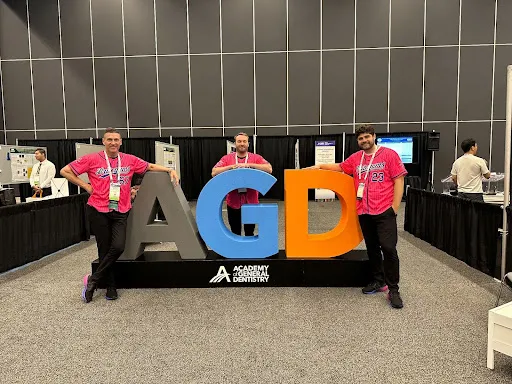
Britegums Shines at AGD Montreal: A New Era in Gingival Esthetics
This past weekend, Dr. Robert Stanley and the Britegums team were thrilled to attend the Academy of General Dentistry (AGD) Annual Meeting in Montreal, where they introduced the world of esthetic gingival depigmentation to dental professionals from around the globe.
The AGD event provided a prime platform for continuing education and networking, and Dr. Stanley’s presentation on "Revolutionizing the World of Esthetic Gingival Procedures" captivated attendees with insights into this growing area of cosmetic dentistry. His session covered key topics, including:
- Emerging Trends in Gingival Depigmentation: Attendees learned about the growing demand for gum depigmentation and its impact on patient satisfaction.
- Gingival Depigmentation Techniques: Dr. Stanley discussed various procedures, from traditional to advanced methods, and how each can enhance clinical practice.
- Patient Demand & Market Opportunity: The increasing desire for cosmetic gum treatments is clear, making it crucial for dentists to stay informed about the latest innovations.
- Differential Diagnoses for Gingival Pigmentation: Dr. Stanley addressed how to differentiate between benign and more serious conditions.
- Real Results: The presentation showcased case studies, with results from three weeks to eight years post-op, highlighting the long-term success of Britegums' procedures.
At the Britegums booth, the excitement continued. The team, led by Shane and Nick, engaged with attendees through interactive experiences, including the popular Spin the Wheel activity. Visitors were eager to learn about the benefits of gingival depigmentation and how it could complement their practice or personal aesthetic goals.
Dr. Stanley and the team connected with dental professionals from around the world, discussing the significant demand for this procedure and the potential it holds for transforming smiles. The booth was a great success, with many new connections made and a clear excitement for what Britegums offers.Looking ahead, Britegums is excited to continue its mission of educating dental professionals on gingival depigmentation and helping practices incorporate this innovative service. As demand for cosmetic procedures grows, Britegums is proud to be leading the charge in enhancing patient smiles and confidence.
For more information on how Britegums can revolutionize your practice or improve your smile, visit Britegums.com.
Thank you to everyone who visited us at AGD Montreal! We look forward to connecting with more dental professionals and helping patients achieve brighter, more confident smiles.
Advance your dental
education today
If you're ready to take your dental practice to the next level, join us at one of our upcoming courses. We'll help you learn the tools you need to succeed!

Thank you to our industry partners